Happiness After Quicksand
Acronyms used in this post:
BD: Bipolar Disorder — a mood disorder in which the mind can swing through depression, agitation, anger, speed, exhaustion, grand plans, ruinous certainty, and the occasional emotional weather system that should honestly require municipal clearance.
Happiness is too large a word for some mornings. It comes wearing a silk kurta, expecting a reception, when all I had asked for was a day in which the mind did not behave like a leaking ceiling during the monsoon.
So let me reduce the claim.
Sometimes happiness is merely the absence of pathological sadness.
Not joy. Not gratitude with flute music. Not a sunlit breakfast where a wise person eats papaya and forgives his enemies. Just the ordinary miracle of not waking up already dragged ankle-deep into black mud.
That may sound small to a healthy person. Healthy people are often very bold with other people’s weather. They say things like go out, meet people, take a walk, reconnect, join a group, sit in the sun, talk to neighbors. Sensible advice, in the way “drink water” is sensible advice unless someone is holding your head under the Hooghly.
For BD, the dose matters.
Too little human contact can rot a person. I know that. I am not advertising the life of a suspicious hermit who survives on tinned beans, old books, and resentment. But too much human contact, delivered through the full Calcutta loudspeaker system of traffic, relatives, vendors, doorbells, WhatsApp forwards, political shouting, unpaid bills, and men who believe the pavement was built for their scooter, can turn my nervous system into a frying pan.
Not a metaphorical frying pan.
A real one.
Oil hot. Mustard seeds exploding. Someone has added dried red chili without warning. Then the whole kitchen is coughing.
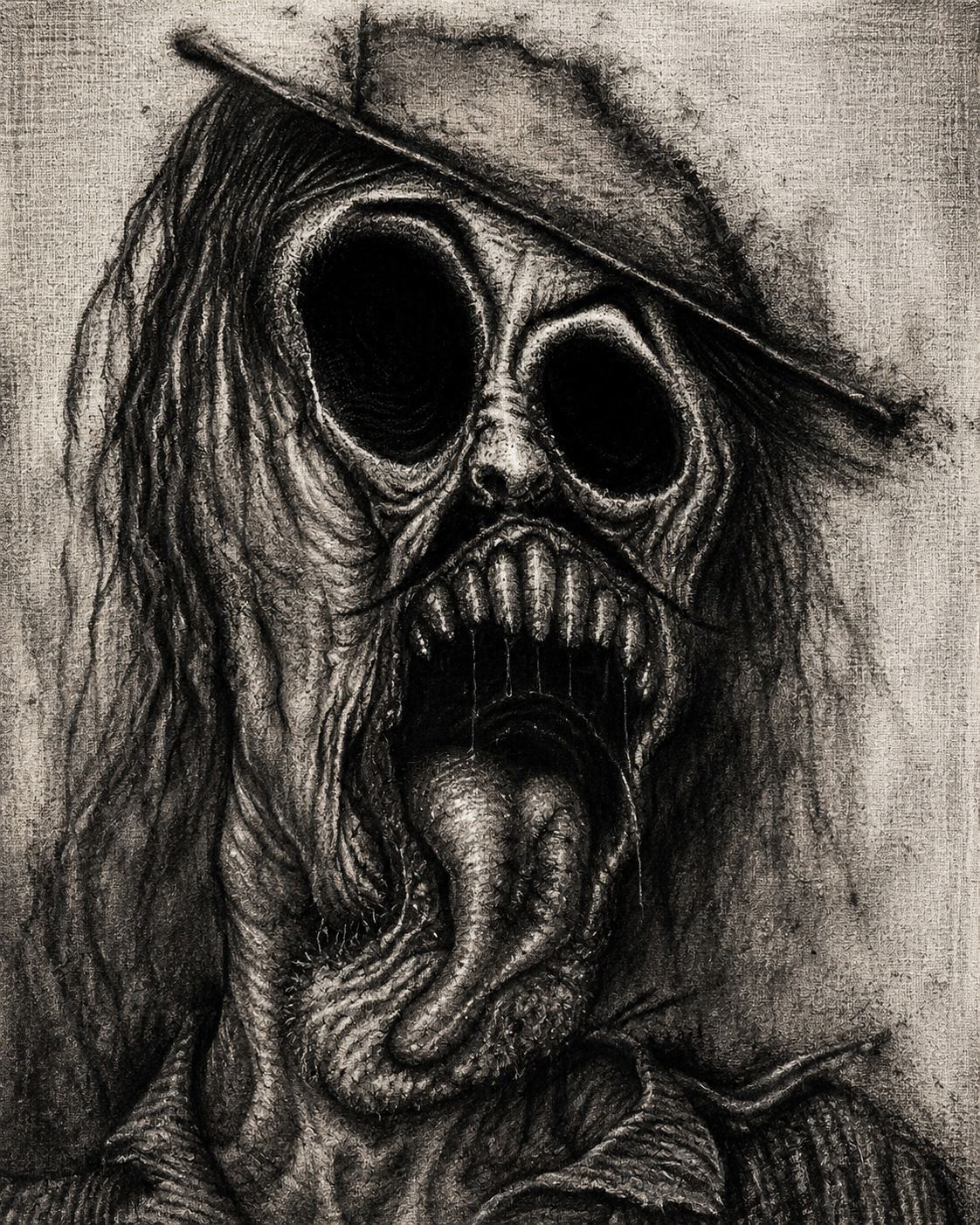
This is the part people miss. A bad mind does not become good merely because the bad circumstances have changed. The body remembers. The mind remembers. Even the knees remember. You may move rooms, jobs, cities, countries, relationships, medicines, routines, diets, and hopes, but some part of you still stands at the old bus stop, waiting for the old humiliation to arrive wearing a fresh shirt.
The old quicksand goes away.
The legs still expect to sink.
I have had periods when life improved on paper but the inner machinery did not receive the memo. The circumstances were no longer as bad. The danger had reduced. The crowd had moved on. The shouting had stopped. Yet the mind kept behaving like a para dog who has been kicked too many times and now suspects even biscuits. Offer it peace, and it sniffs for poison.
This is not philosophy. It is Tuesday.
In the shanty boondocks of Calcutta, Tuesday has its own philosophy anyway. The milk packet sweats on the counter. The phone screen lights up with some headline about markets, wars, elections, artificial intelligence, a minister making noises, a billionaire acquiring another moon, or a celebrity divorce being treated as if civilization itself had slipped on a banana peel. Outside, a horn bleats with the despair of a goat trapped inside a machine. Somewhere a pressure cooker screams.
And inside my small apartment, I am trying to remain a citizen.
This is harder than it sounds.
A person with BD does not always need drama. Drama arrives pre-installed. It sits behind the ribs, polishing its shoes. One wrong sound, one insult, one bureaucratic stupidity, one neighbor asking a question with the surgical delicacy of a brick, and suddenly a minor inconvenience begins to look like a constitutional crisis.
I know this version of myself. I do not admire him.
He is fast. He is verbal. He can produce invective the way a cheap printer produces exam forms. He can mistake anger for clarity. He can feel, for five blazing minutes, that he has finally understood the moral architecture of the universe, which is usually the exact moment the universe should take away his microphone.
So I live alone.
There. The scandalous sentence.
A single middle-aged man in a Calcutta apartment, not stepping onto the terrace for months, ordering canned food, avoiding crowds, refusing most unnecessary contact, keeping the door shut not because he is spiritually elevated but because the outside world has too many handles and all of them can pull him apart.
People dislike this picture.
They prefer recovery to look cheerful. Morning walk. Vegetable shopping. Light banter with the fish seller. A clean shirt. A revived social life. A man slowly returning to the species, like a documentary animal released into a forest with a small tracking collar.
But recovery is not always photogenic.
Sometimes it looks like avoidance. Sometimes it looks like silence. Sometimes it looks like a man choosing not to go outside because outside contains too many chances to become the worst available version of himself.
This is not a recommendation. I am not saying solitude cures BD. It does not. Medicines matter. Doctors matter. Sleep matters. Food matters. Money matters, more than polite society admits. Work matters. The body matters. The terrible boring basics matter. A person cannot outwit illness by becoming a tragic poet with better lighting.
But in my case, solitude helps.
Not grand solitude. Not mountain solitude. Not the kind of solitude where a man grows a beard and discovers truth under a waterfall. Mine is very ordinary solitude. Plastic chair solitude. Ceiling fan solitude. Online grocery solitude. The kind where one sock disappears for three weeks and then reappears under a book, looking morally innocent.
Yet this small solitude works like a fence.
It reduces sparks.
It keeps the anger from finding an audience. It keeps the agitation from walking into a crowd and auditioning for disaster. It keeps me away from the Calcutta mob, that ancient and efficient committee of public correction, which can assemble faster than a food delivery rider in a thunderstorm if it suspects someone has spoken too loudly, too strangely, or too madly.
And I would rather be alone in a room than muttering curses in a crowd while five indignant men prepare to educate me with elbows.
This may not be a heroic preference.
It is a practical one.
A life has to be built around its failure points. A rickety table is not improved by pretending it can hold a wedding feast. You look at the weak leg. You wedge folded newspaper under it. You do not invite seventeen relatives to lean on it while discussing politics.
My weak leg is overstimulation.
Noise. Intrusion. Forced sociability. Surprise demands. Casual contempt. The city pressing its thumb into the soft part of the brain. For someone else, these may be ordinary annoyances. For me, under the wrong internal weather, they become matches near kerosene.
So I remove the matches.
People call this reclusive.
Fine.
Names are cheap. Rent is not.
I know the dangers. Loneliness can become a swamp. A closed room can shrink the mind. One can begin to mistake habit for safety and safety for life itself. The world outside, if avoided too long, grows teeth in the imagination. The terrace becomes Everest. The lane becomes a border crossing. The doorbell becomes a court summons.
I am not blind to this.
But the clean solution is not available.
This is the adult sentence no motivational speaker wants embroidered on a cushion. The clean solution is not available. Not in middle age. Not in BD. Not in a lower-middle-class Calcutta life where consulting income comes like a shy cat, sometimes visible, sometimes absent, always slightly suspicious. Not when the body has been dragged through too many emotional neighborhoods and the mind has kept souvenirs from each one.
So you do not solve everything.
You reduce harm.
You make a smaller life that does not explode.
You keep a routine. You eat something, even if it comes from a can and would make a nutritionist blink twice. You take the medicine if medicine is part of your regimen. You avoid unnecessary war. You let messages wait. You do not turn every provocation into a court case in the Supreme Court of Your Own Skull.
You try, with limited equipment, to remain alive and not unbearable.
This is not defeat. It is maintenance.
A ceiling fan also needs maintenance. Nobody calls it a coward because it cannot become an airplane.
There is a particular dignity in knowing one’s limits. Not the glossy dignity of public success. Not the LinkedIn kind, where everyone is honored, thrilled, humbled, and somehow standing beside a banner. I mean the private dignity of saying: here is what I can do; here is what I cannot do; here is where I become dangerous to myself; here is where I become unpleasant to others; here is the fence; here is why the fence stays.
The world praises ambition but has little patience for containment.
Yet containment saves lives.
A man who says he should not drink is considered responsible. A man who says he should not gamble is considered prudent. A man who says he should not drive when angry is considered sensible. But a man who says he should not overexpose himself to crowds because his agitation can turn into public combustion is often treated as if he has surrendered.
Maybe he has.
Or maybe, after many foolish experiments, he has finally stopped lying.
There is a difference.
What I want now is modest. I do not want to be cured into someone else’s personality. I do not want to become a smiling community brochure. I do not want false cheer served in a paper cup. I want the sadness to loosen its grip. I want anger to stop arriving with a brass band. I want sleep that does not feel like being lowered into a well. I want mornings that do not begin with the brain filing charges against existence.
Small things.
Gigantic things.
A day without quicksand.
A day when the room is merely a room, not a bunker.
A day when canned food is just canned food, not evidence in a trial about my life.
A day when the city can roar outside and I do not have to answer it.
Maybe, later, the door opens more. Maybe I go to the terrace. Maybe I stand there one evening and watch the southern fringe of Calcutta turn orange and dusty and almost tender, while a kite circles above some unfinished building and a child below shouts as if appointed spokesperson for the entire lane. Maybe I buy vegetables like a normal man. Maybe I argue about the price of tomatoes and return home without wanting to rewrite the laws of civilization.
Maybe.
For now, this is what I have.
A small apartment. A careful quiet. A life that may look narrow from outside but from inside feels like a negotiated ceasefire. The crowd remains elsewhere. The mango tree remains purely botanical. The worst sentences stay unwritten, or at least unsent. The mind, suspicious old clerk that it is, slowly stamps one form after another.
Not happy.
Not yet.
But not sinking.
Some days, that is enough to keep the republic of one man standing.